Kevin Nash is an American professional wrestler and actor best known as Diesel in WWE and as a founding member of the New World Order in World Championship Wrestling. A towering heavyweight with a deliberately measured style, Nash became a leading figure during the wrestling industry’s intensely competitive 1990s and won world championships in both promotions.
Nash entered the WWE Hall of Fame individually in 2015. He received a second induction as part of the New World Order, alongside Hulk Hogan, Scott Hall and Sean Waltman, in the class announced for 2020 and formally inducted at the delayed ceremony in 2021.
Early career and WCW characters
Nash began his major national wrestling career with World Championship Wrestling in 1990. His early WCW run was defined by a succession of characters rather than sustained competitive success. He first appeared as Steel, one half of the Master Blasters, before being repackaged as Oz, a fantasy-inspired character presented with elaborate costuming. He later became Vinnie Vegas, a brash casino-themed persona who teamed with Diamond Dallas Page and competed as part of the Diamond Mine.
These roles gave Nash television experience but did not yet establish him as a main-event wrestler. His eventual breakthrough came after he left WCW for the World Wrestling Federation, later renamed WWE. There, a simpler presentation emphasized his size, composure and physical presence rather than an elaborate costume or fictional background.
Diesel in the World Wrestling Federation
Nash debuted in the WWF in 1993 as Diesel, the bodyguard and ringside enforcer for Shawn Michaels. Wearing dark clothing and sunglasses, Diesel was initially a mostly silent supporting character. His association with Michaels quickly gave him a prominent position on television, while their contrasting personalities—Michaels as the outspoken showman and Diesel as the restrained powerhouse—made them an effective on-screen pairing.
Diesel soon moved into championship contention. He won the Intercontinental Championship from Razor Ramon in 1994 and held the WWF Tag Team Championship with Michaels. Their partnership eventually deteriorated within the storyline, turning Diesel into one of the company’s leading fan favorites. In November 1994, he defeated Bob Backlund at Madison Square Garden in a match lasting only seconds to win the WWF Championship.
Diesel held the championship for nearly a year. His reign included a successful defense against Michaels at WrestleMania XI, where their former alliance provided the basis for the title match. He also worked major programs with opponents including Sycho Sid, King Mabel and Bret Hart. Hart defeated Diesel for the championship at Survivor Series 1995, ending the reign after 358 days.
Nash left the WWF in 1996. Shortly before his departure, he participated in the incident later called the “Curtain Call,” when Nash, Michaels, Scott Hall and Paul Levesque embraced in the ring at Madison Square Garden despite being portrayed on television as rivals. The moment publicly exposed the distinction between their storylines and their real-life friendship at a time when wrestling promotions generally protected that separation more closely.
The Outsiders and the New World Order
Nash returned to WCW in 1996 under his real name. Scott Hall had appeared on WCW programming shortly before him, and the two were presented as hostile outsiders challenging the company’s established wrestlers. Although their recent WWF backgrounds were central to the presentation, the angle did not formally depict them as WWF representatives.
At Bash at the Beach 1996, a pay-per-view event built around the outsiders’ invasion, Hulk Hogan joined Hall and Nash and turned against WCW. The three formed the New World Order, commonly abbreviated as the nWo. Its black-and-white visual identity, anti-establishment presentation and expansion through defections became central to WCW programming during the promotion’s period of ratings success against the WWF.
Nash and Hall competed together as the Outsiders and repeatedly held the WCW World Tag Team Championship. Nash’s relaxed delivery and sardonic humor also became important elements of his on-screen character. As the nWo grew, internal disputes produced multiple versions of the group. Nash led the red-and-black nWo Wolfpac, which was portrayed as a more fan-friendly rival to Hogan’s faction.
At Starrcade 1998, Nash defeated Goldberg for the WCW World Heavyweight Championship after Hall interfered with a stun gun. The result ended Goldberg’s televised undefeated streak and made Nash one of WCW’s principal champions. On the January 4, 1999 episode of Nitro, Nash lost the title to Hogan after collapsing from a light finger poke. The deliberately staged surrender, remembered as the “Fingerpoke of Doom,” reunited major portions of the nWo within the storyline.
Nash remained a prominent WCW performer through the company’s final years. He held the WCW World Heavyweight Championship on several occasions and also worked in a backstage creative role. His dual position as performer and decision-maker made him a frequent subject of debate, particularly when television stories involved his own championship pursuits. WCW ceased operating as an independent promotion in 2001 after its assets were acquired by the WWF.
WWE return and injury
Nash returned to WWE in 2002 with Hogan and Hall as a revived nWo. The group was introduced as an antagonistic force, but injuries and changes in audience response prevented the revival from matching the original WCW version. In July 2002, Nash tore a quadriceps muscle shortly after entering a match on Raw, forcing the other performers to adjust the bout while it was underway. The injury required an extended absence.
After returning in 2003, Nash challenged Triple H for the World Heavyweight Championship and faced him inside Hell in a Cell at Bad Blood. He also wrestled Chris Jericho in a hair-versus-hair match before leaving regular WWE competition.
Total Nonstop Action Wrestling
Nash subsequently became a recurring presence in Total Nonstop Action Wrestling, now known as TNA. His first major appearances came in 2004, when he aligned with Hall and Jeff Jarrett. Across several separate runs, Nash shifted between serious main-event programs, veteran alliances and comedy-based supporting roles.
One of his more distinctive TNA assignments involved the X Division. Nash appeared in backstage segments with younger wrestlers and participated in the Paparazzi Championship Series, a comic tournament associated particularly with Alex Shelley. The material used Nash’s established veteran persona while placing him in a division otherwise known for smaller, faster competitors.
He later joined the Main Event Mafia, an on-screen group of veteran wrestlers that included Kurt Angle, Sting, Booker T and Scott Steiner. The faction’s central storyline set accomplished former world champions against younger members of the TNA roster. Nash won TNA’s Legends Championship and also held the promotion’s tag team title during his time with the company.
Later WWE appearances
Nash made a surprise appearance as Diesel in the 2011 Royal Rumble match, reviving the name and visual presentation that had first made him a WWF headliner. He returned to WWE storylines later that year under his real name and became involved in a program featuring CM Punk and Triple H. Nash faced Triple H in a ladder match at TLC: Tables, Ladders & Chairs 2011, after which his regular in-ring appearances became increasingly limited.
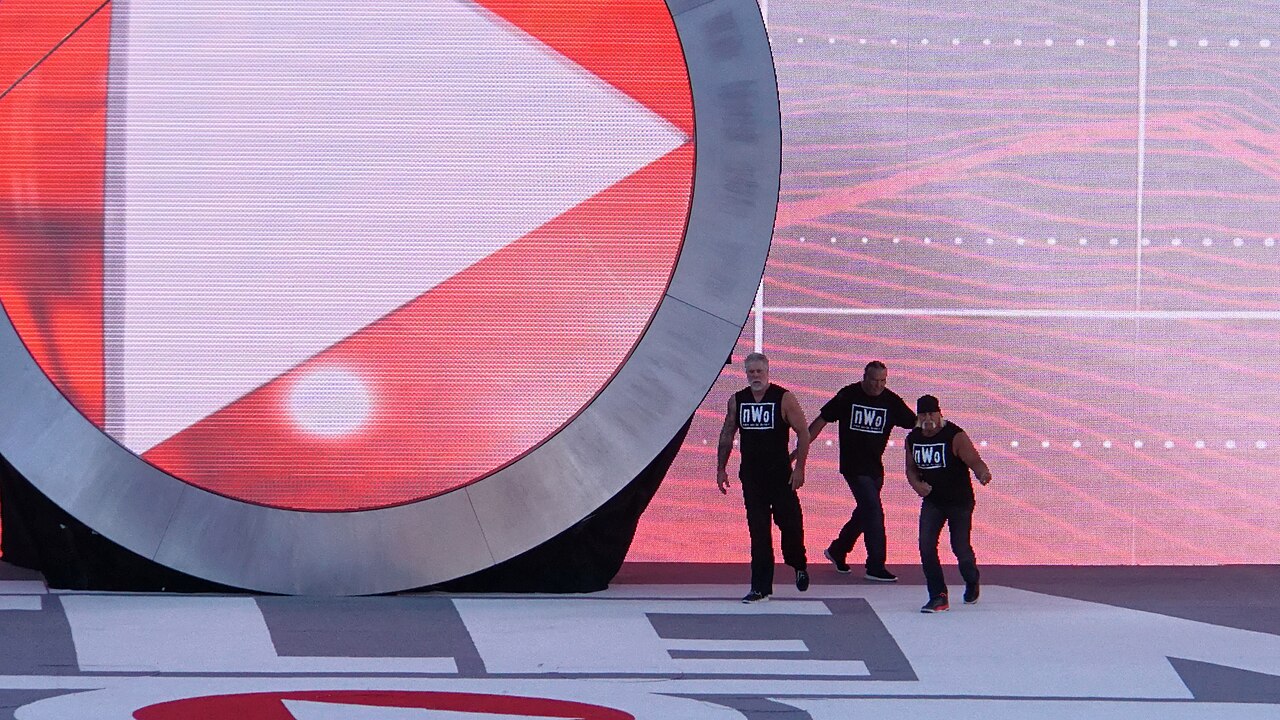
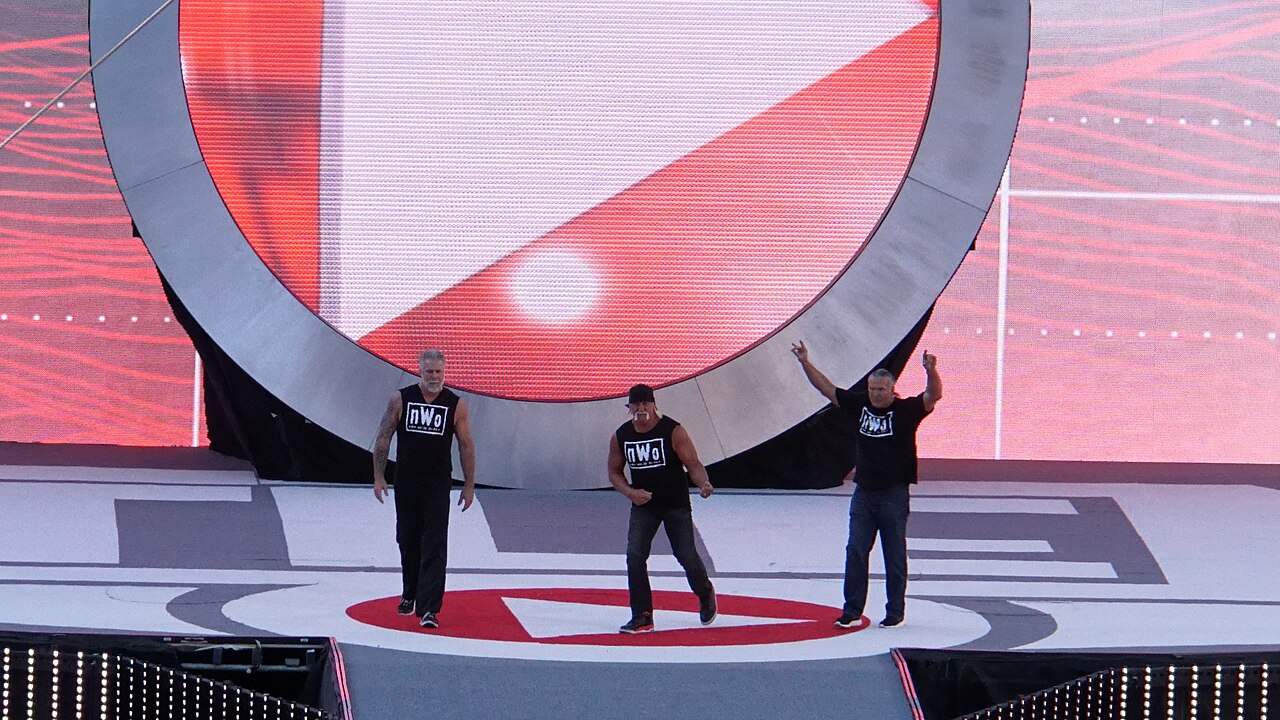
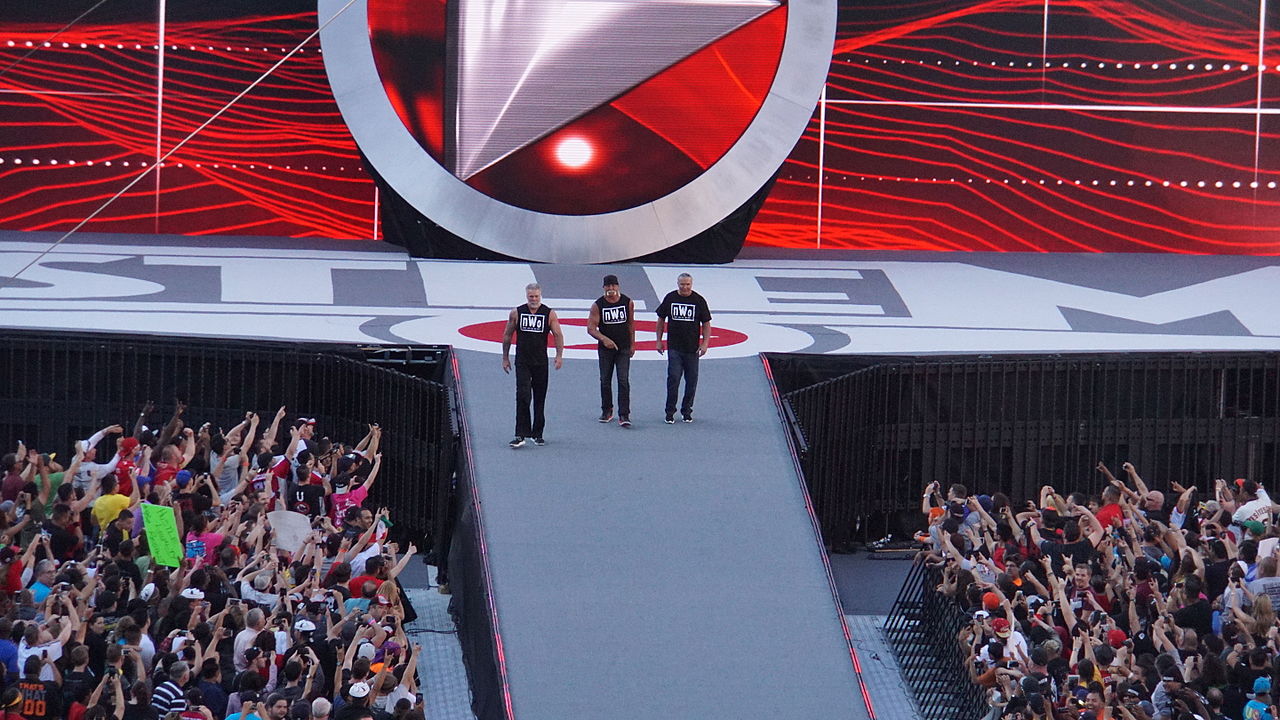
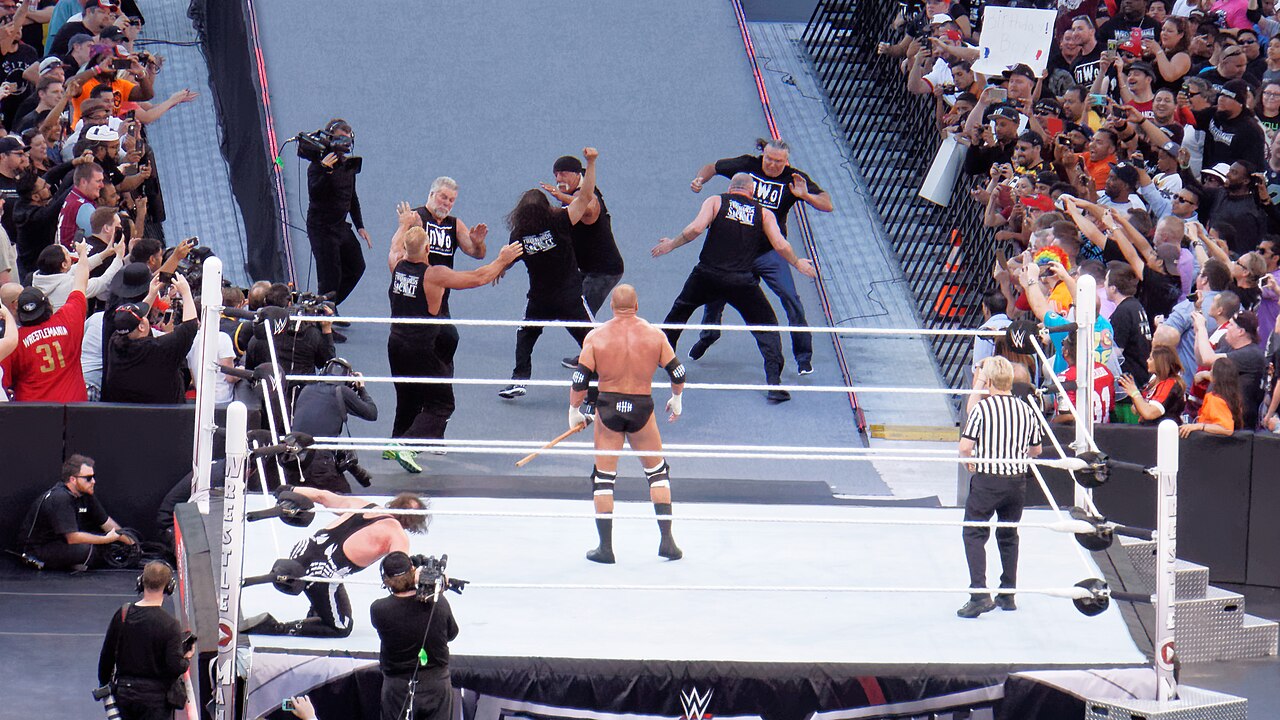
At WrestleMania 31 in 2015, Nash appeared with Hall and Hogan during Sting’s match against Triple H. The sequence brought the nWo and D-Generation X into the same on-screen confrontation, drawing on the imagery of the former WCW–WWF rivalry. Nash’s appearance occurred immediately after his Hall of Fame induction weekend.
WWE Hall of Fame
WWE announced Nash as the final member of its Hall of Fame class of 2015, identifying him as a former WWE and WCW world champion. Shawn Michaels inducted him at the ceremony, connecting the honor to the partnership that had launched Diesel’s rise in 1993. WWE’s archive includes the 2015 WWE Hall of Fame induction speeches, while its announcement describes Nash as the class’s final inductee.
The New World Order was selected for induction as a group in the 2020 class. Because the ceremony was postponed during the COVID-19 pandemic, the induction took place in 2021 as part of a combined presentation. The recognized lineup consisted of Nash, Hogan, Hall and Waltman, making Nash a two-time WWE Hall of Fame inductee. The group honor reflected the nWo’s importance to WCW’s late-1990s identity and to the wider presentation of faction-based wrestling storylines.
Wrestling persona and legacy
Nash’s principal finishing move was the Jackknife Powerbomb, a release powerbomb suited to his heavyweight presentation. As Diesel, he was often called “Big Daddy Cool,” while his WCW work relied more heavily on his real name and association with the Outsiders and nWo. Rather than emphasizing speed or elaborate combinations, his matches generally centered on reach, power and controlled movement.
Across WWF/WWE and WCW, Nash won six recognized world championships: one WWF Championship and five WCW World Heavyweight Championships. He also won major singles and tag team titles, including the WWF Intercontinental Championship and championships with Michaels and Hall. Those accomplishments span two sharply different versions of his career—the largely silent Diesel bodyguard who became WWF champion and the conversational, self-assured Kevin Nash who helped define the nWo.
His historical importance rests especially on that transition. Nash was a top champion before the Monday-night ratings competition reached its peak, then became one of the performers most closely associated with WCW’s challenge to WWE. His Hall of Fame inductions recognize both his individual career and his place within a group whose visual style, language and faction structure remained influential long after WCW closed.
Frequently asked questions
Is Kevin Nash the same wrestler as Diesel?
Yes. Kevin Nash performed as Diesel in the World Wrestling Federation during the 1990s and revived the character for selected later WWE appearances.
When was Kevin Nash inducted into the WWE Hall of Fame?
Kevin Nash was inducted individually in 2015. He received a second induction as a member of the New World Order in the class announced for 2020 and inducted in 2021.
Who inducted Kevin Nash into the WWE Hall of Fame?
Shawn Michaels inducted Kevin Nash into the WWE Hall of Fame in 2015.
How many world championships did Kevin Nash win?
Kevin Nash won six recognized world championships across WWF and WCW: one WWF Championship and five WCW World Heavyweight Championships.
Why is Kevin Nash associated with the nWo?
Kevin Nash joined Scott Hall and Hulk Hogan in forming the New World Order in WCW in 1996. He later led the nWo Wolfpac and was inducted into the WWE Hall of Fame with the group.